

Ready.gov provides in-depth information for earthquake safety. What is an earthquake myth? The safest place in the house is NOT in a doorway. You are actually more safe under a table!
During an Earthquake
DROP
where you are, onto your hands and knees. This position protects you from being knocked down and also allows you to stay low and crawl to shelter if nearby.
COVER
your head and neck with one arm and hand If a sturdy table or desk is nearby, crawl underneath it for shelter.
- If no shelter is nearby, crawl next to an interior wall (away from windows)
- Stay on your knees; bend over to protect vital organs
HOLD ON
until the shaking stops.
- Under shelter: hold on to it with one hand; be ready to move with your shelter if it shifts
- No shelter: hold on to your head and neck with both arms and hands.”
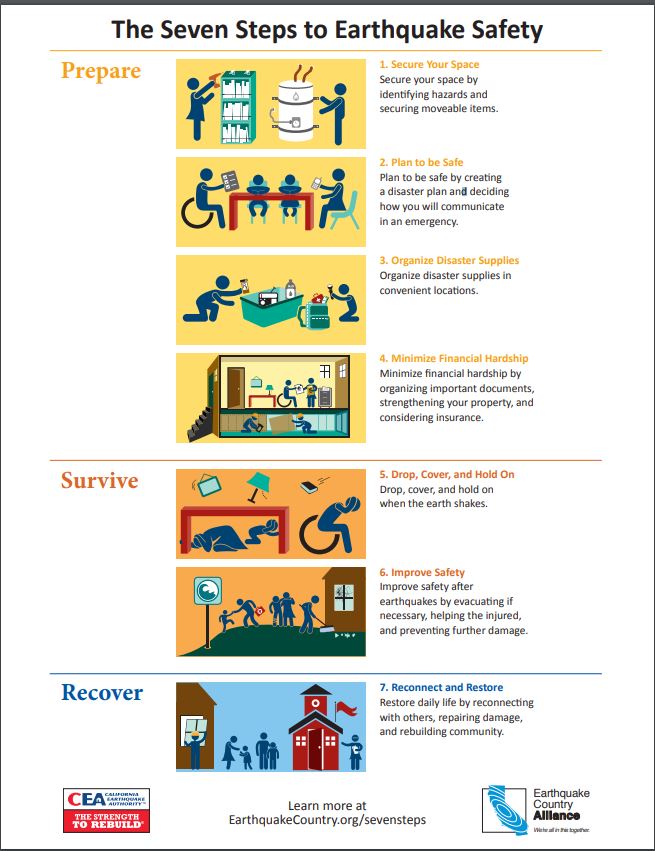
7 Steps to Earthquake Safety
7. Restore daily life by reconnecting with others,repairing damage, and rebuilding community
Before an Earthquake: Emergency Earthquake Kit
Do you have an emergency earthquake kit in your home? Have you talked as a family about what your earthquake plan is? Make it a weekend project to create the plan, make a kit, and talk about what your plan is.
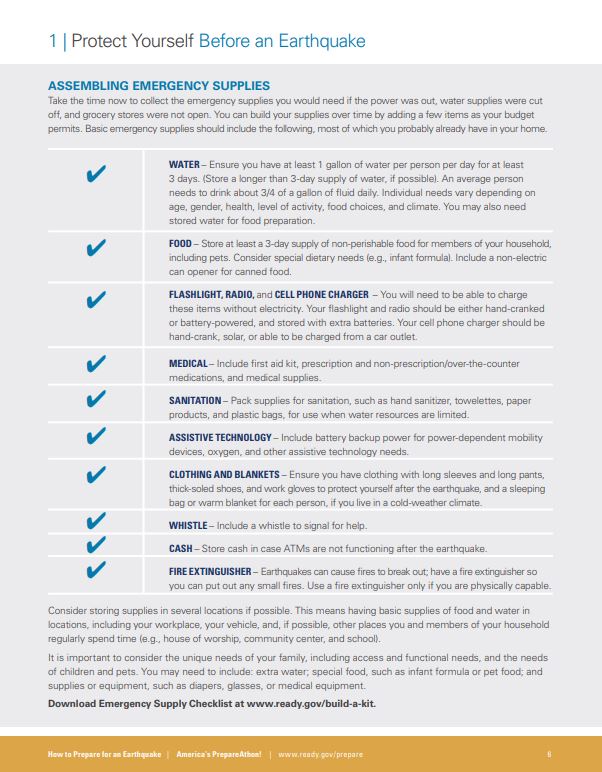
The basic emergency supplies recommended by FEMA.gov include the following:
- Water – at least 1 gallon of water per person per day (at least a 3 day supply)
- Food – at least a 3 day supply per person of non-perishable food
- Flashlight, radio, and cell phone charger that will charge without electricity
- Medical – first aid kit, medications, and medical supplies
- Sanitation – hand sanitizer, towlettes, paper products, and plastic bags
- Assistive Technology – battery backup for mobility devices, oxygen and other assistive technology needs
- Clothing and Blankets – warm clothing, thick-soled shoes, work gloves
- Whistle
- Cash – in case ATMs are not working
- Fire Extinguisher
All information is believed to be accurate, please verify.