

National Public Radio (NPR) ran a story last Monday with the title, “Mortgage Rates Are Near All-Time Lows As Coronavirus Worries Hit Markets“. If there is any ray of sunshine in the news right now, it is that home buying might be the most attainable that it has been for Americans in years.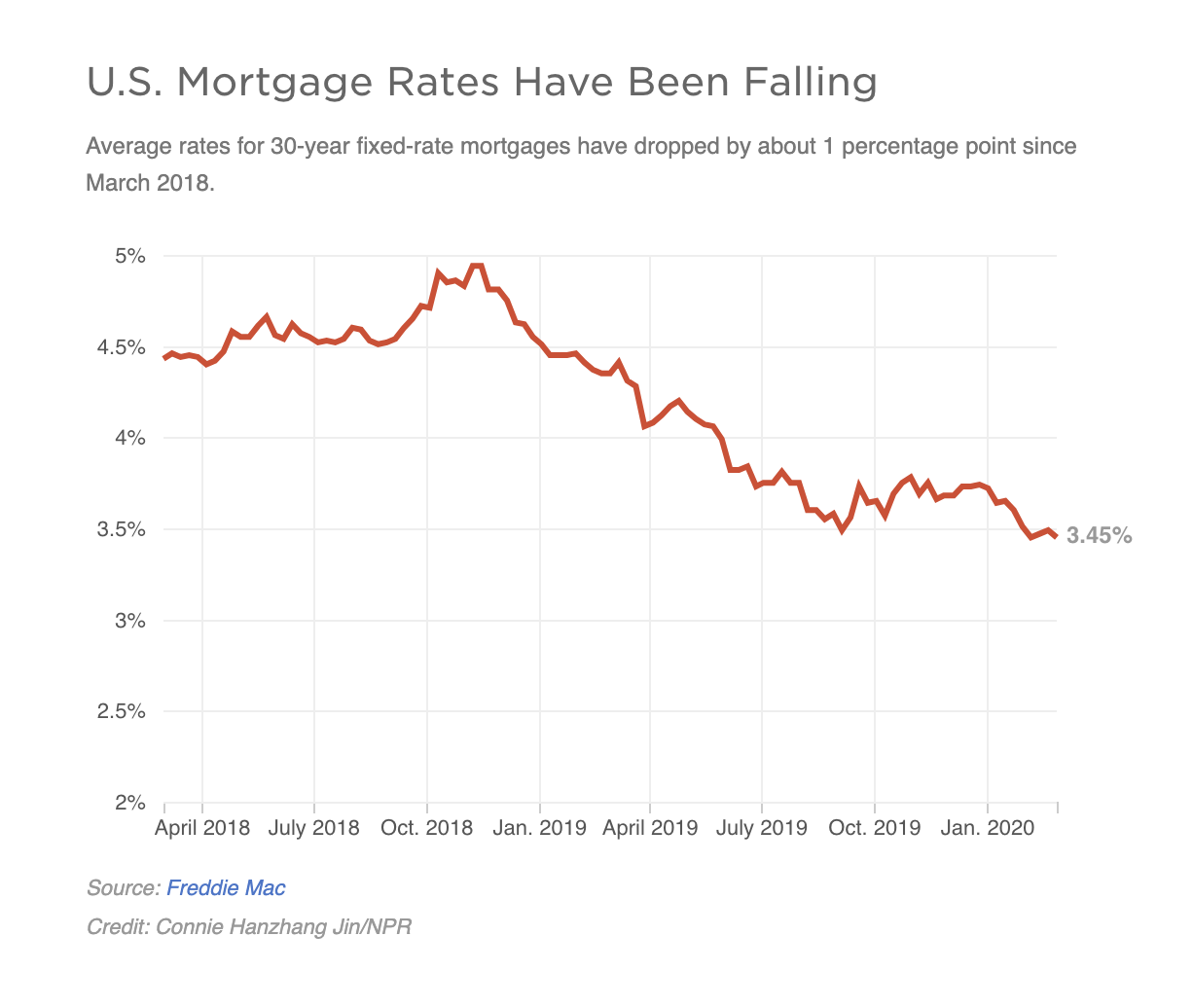
Our two pieces of advice to would-be homebuyers:
1. Get pre-qualified
2. Wash your hands
Our two pieces of advice to homeowners:
1. Consider a refinance
2. Wash your hands
3. Consider purchasing an investment property or vacation home
Laurie Goodman, co-director of the Housing Finance Policy Center at the Urban Institute told NPR, “Homeownership is really the single best way to build wealth“. For most Americans, our biggest investment is our home. It might even be a part of our retirement plan.
Mortgage interest rates are around 3.5 percent — and although it might not look like a big difference from last year’s rates at 4.5 percent — there is a significant benefit in your monthly payment.
How big is the difference in monthly payment? NPR reported that the decrease in mortgage rates “effectively makes the same-priced house from a year ago more than 10% cheaper today in monthly mortgage payments.”
Are you considering selling your current home and moving? Here is something worth repeating: an agent in our office recently listed a home in San Dimas. After receiving over a half-dozen offers in one weekend, that home is currently in escrow for $21,000 over list price. Wow.
Your next question might be: “Well, that sounds good, but was it listed too low in the first place?”
As a real estate company and brokerage, we trust the supply and demand curve. We might run the comparable data and list at a certain price, but if your home is worth more in today’s market, then homebuyers will bid up and your home will go into escrow at market price. $21,000 over list price means that homebuyers are eager and ready to purchase!
On a serious note, if you have questions about Coronovirus, how to avoid getting sick, and what the best response plan is, then check out the Center for Disease Control (CDC) and their frequently asked questions page.
Source: